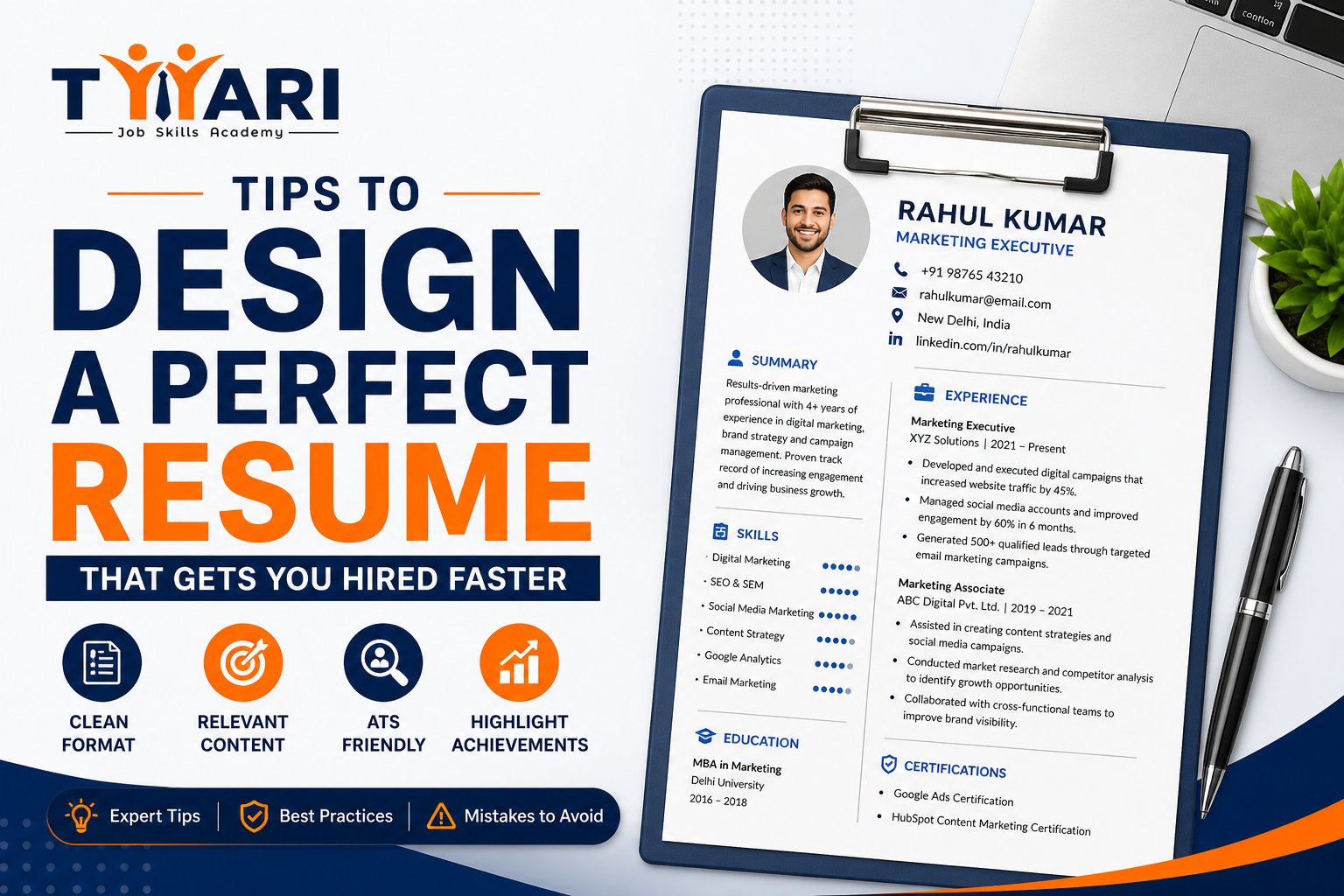
Introduction
Your resume is your first impression—and in today’s competitive job market, you often have just 6–8 seconds to grab a recruiter’s attention.
A well-designed resume is not just about listing your qualifications; it’s about presenting your value clearly, professionally, and strategically.
In this guide, we’ll walk you through practical resume design tips that can significantly improve your chances of landing interviews.
1. Keep It Clean and Professional
A cluttered resume is an instant rejection.
- Use simple fonts like Arial, Calibri, or Helvetica
- Maintain consistent spacing and margins
- Avoid too many colors or graphics
👉 Pro Tip: Stick to black + one accent color for a modern look.
2. Choose the Right Resume Format
There are three common formats:
- Chronological Resume – Best for experienced professionals
- Functional Resume – Ideal for freshers or career changers
- Combination Resume – Mix of both skills and experience
👉 Choose the format based on your career stage.
3. Write a Strong Professional Summary
Instead of an objective, write a powerful summary:
❌ “Looking for a job where I can grow”
✅ “Results-driven marketing executive with 3+ years of experience in digital campaigns and lead generation”
👉 This is your elevator pitch—make it impactful.
4. Use Bullet Points for Readability
Recruiters scan resumes quickly.
- Use short bullet points
- Start with action verbs (Managed, Led, Created, Improved)
- Keep sentences concise
5. Highlight Achievements, Not Just Responsibilities
Don’t just say what you did—show your impact.
❌ “Handled social media accounts”
✅ “Increased Instagram engagement by 60% in 3 months”
👉 Numbers make your resume credible.
6. Optimize for ATS (Applicant Tracking Systems)
Most companies use ATS software to filter resumes.
- Use relevant keywords from job descriptions
- Avoid images, tables, or complex designs
- Save your resume as PDF or Word (as required)
👉 Without ATS optimization, your resume may never reach a recruiter.
7. Use Proper Section Headings
Organize your resume clearly:
- Contact Information
- Professional Summary
- Skills
- Work Experience
- Education
- Certifications
👉 Clear structure improves readability and professionalism.
8. Keep It Concise
- Freshers: 1 page
- Experienced candidates: 1–2 pages max
👉 Avoid unnecessary details like hobbies unless relevant.
9. Add Relevant Skills Only
Focus on job-specific skills:
- Technical skills
- Tools & software
- Industry-specific knowledge
👉 Avoid generic skills like “hardworking” or “team player.”
10. Proofread and Avoid Errors
Even a small typo can cost you the job.
- Check grammar and spelling
- Use tools like Grammarly
- Read your resume aloud
👉 A polished resume reflects attention to detail.
Common Resume Mistakes to Avoid
- Using unprofessional email IDs
- Including irrelevant personal details
- Writing long paragraphs
- Using outdated formats
- Copy-pasting the same resume for every job
Bonus Tip: Customize for Every Job
One resume does NOT fit all.
👉 Tailor your resume based on:
- Job role
- Company requirements
- Industry expectations
Conclusion
Designing a perfect resume is not about being fancy—it’s about being clear, relevant, and impactful.
By following these resume tips, you can create a document that:
✔ Grabs attention
✔ Passes ATS filters
✔ Converts into interview calls
_________________________
👉 Start your journey towards career success today
👉 Join Tyyari Job Skills Academy
📞 Contact Us: +91 76682 85834
📧 Email: jobs@tyyari.com
Official Website: https://tyyari.com
Tyyari @ Facebook : https://www.facebook.com/TyyariJobs/
Tyyari @ Instagram : https://www.instagram.com/tyyarijobs/